
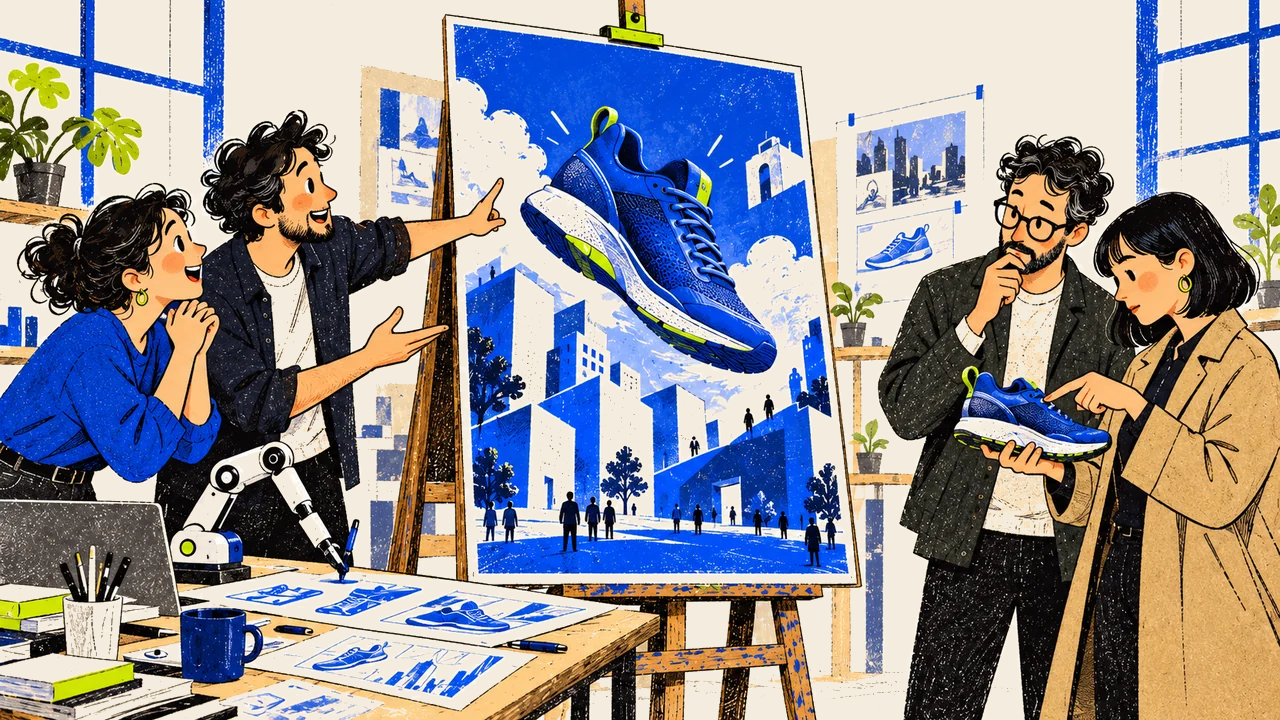
I can see why the team is pleased. A visual that would have required a difficult shoot is sitting in the presentation, and there is still enough budget to try another version. That is a real production advantage. The awkward part begins when enthusiasm for making the image becomes a prediction about how much someone else will like looking at it.
The person seeing the finished ad has none of that context. They do not know how many versions were tried or how much the production saved. They have a few seconds with the result, and whatever they already believe about the business behind it.
The audience did not attend the production meeting. They cannot admire the deadline the team rescued unless the finished work gives them something worth noticing. I would want to see whether the idea survives without someone beside the screen explaining what an achievement it was.
The room approving the work is a particular audience
In IAB and Sonata Insights' January 2026 research, 82% of surveyed advertising executives believed Gen Z and Millennial consumers felt positive about AI-generated advertising. Among the surveyed consumers, 45% actually reported feeling positive. The study involved more than 500 consumers in those generations and 100 advertising executives.
That gap is more interesting to me than a simple argument over whether AI ads are good or bad. The people commissioning the work and the people receiving it were not describing the same level of enthusiasm. A presentation can get an approving response around the table while leaving the audience's reaction largely unknown.
These are reported attitudes, not campaign sales results. The survey cannot tell us that a particular AI-generated ad will fail, or that one made through a different process will succeed. It gives us a reason to examine an assumption before treating it as audience knowledge.
What is the image asking us to believe?
Imagine two uses for a generated image. One shows a giant shoe floating between buildings in a deliberately impossible city. Another appears to show the texture and fit of the actual shoe a customer will receive. The second image carries a different responsibility, even if both were made with the same tool.
In the impossible scene, the invention is part of the idea. In the product demonstration, the viewer needs to know whether the image can support a practical decision. Does the shoe bend that way? Is that the real finish? Does the person shown wearing it represent an actual fit? A convincing image is not enough to answer those questions.
I would want the team to decide what the visual needs to establish before choosing the quickest way to produce it. There may be parts of the work where generation offers useful freedom and others where a straightforward photograph or recording gives the audience better evidence.
I would happily let an impossible shoe float between buildings if that served the idea. I would be much less comfortable using an invented close-up to answer a practical question about the material. The strange image announces its invention. The convincing one may ask for a kind of trust it has not earned.
Let the idea survive without the production story
One useful review would be to show the work without first explaining how it was made. Ask people in the intended audience what they think is being offered, what they believe the image demonstrates and what they would need to know next. Their answers may reveal a problem that a discussion of impressive production techniques never reaches.
I would then examine the production context separately, including how any AI use should be explained to viewers. That is a proposed way to learn, rather than a test whose outcome we can assume. The tool's involvement may matter to some people, and understanding the message does not automatically mean trusting it or wanting the product.
There is no need to dismiss a genuine saving in time or money. A small team may be able to explore an idea it could never have afforded to shoot. That is worth having. The finished work still needs to give the viewer a reason to care about the product, and enough reliable information to understand what is being promised.
For the final review, I would put the real shoe beside the image and ask what a buyer could reasonably believe they were being shown. The answer may leave plenty of room for invention. It may also show where a less spectacular photograph would be doing the more useful job.
Research note
The shoe examples are hypothetical. IAB's findings describe surveyed executives' expectations and Gen Z/Millennial consumers' stated attitudes, rather than all age groups or observed campaign performance. The suggested review is an editorial recommendation, not an experiment reported by the study.